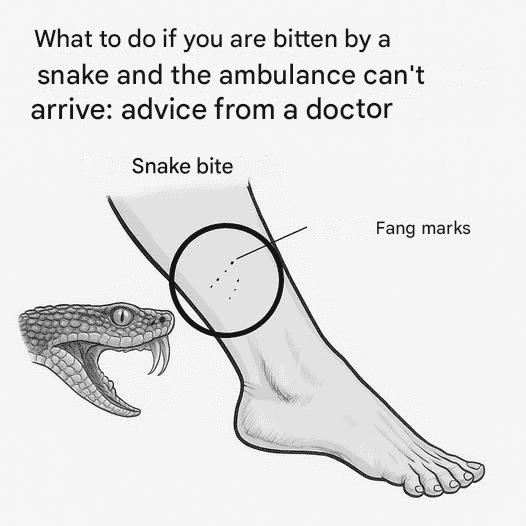
What to Do If You’re Bitten by a Snake and an Ambulance Can’t Get There
Snake bites are rare but potentially life-threatening emergencies. If you’re bitten by a snake and medical help is delayed, knowing the right steps can save your life or prevent serious complications.
This guide provides actionable steps, what not to do, and how to stay safe while waiting for professional care.
1. Stay Calm and Move Slowly
Why it matters:
-
Panicking increases heart rate and blood circulation, which spreads venom faster.
-
Slow, calm movements reduce venom absorption.
Action steps:
-
Sit or lie down immediately.
-
Keep the bitten limb immobilized and below heart level.
-
Try to remain as still as possible while help is arranged.
Anxiety and running can make the situation much worse.
2. Identify the Snake (Safely)
-
Only do this without approaching the snake.
-
Note color, pattern, size, and head shape from a safe distance.
-
If you have a phone, take a photo from a safe distance. This helps medical professionals identify the venom type.
Never try to catch or kill the snake; this increases the risk of more bites.
3. Call Emergency Services Immediately
Even if an ambulance is delayed:
-
Call local emergency numbers and report your location.
-
Inform them of the snake type if known, symptoms, and number of bites.
-
If you are in a remote area, ask for instructions on evacuation or use local first responders.
4. Keep the Bite Area Still and Below Heart Level
-
Use a splint or cloth to immobilize the limb.
-
Avoid bending the joint near the bite, which can increase venom spread.
-
Do not use a tourniquet — this can cause permanent tissue damage.
5. Clean the Bite (Gently)
-
Wash the bite with soap and water if available.
-
Cover with a clean, dry cloth.
-
Do not cut the wound or attempt to suck out venom — these are outdated and dangerous methods.
6. Monitor Symptoms Closely
Watch for signs of severe envenomation:
| Symptom | What it indicates |
|---|---|
| Swelling spreading rapidly | Local tissue reaction |
| Severe pain | Local venom effect |
| Nausea, vomiting, or diarrhea | Systemic effect |
| Dizziness or fainting | Low blood pressure or shock |
| Trouble breathing or swallowing | Severe systemic reaction; urgent medical attention |
If any of these symptoms occur, try to get professional help as soon as possible, even if it means calling for helicopter or volunteer rescue.
7. Use Pressure Immobilization for Certain Snakes (Australia & Some Regions)
-
For elapid snakes (Australia, some Asian snakes), pressure immobilization may help:
-
Apply a broad elastic bandage starting at the bite site and wrap up the limb.
-
Keep the limb immobilized until medical help arrives.
-
This technique is not recommended for pit viper bites (copperheads, rattlesnakes). Know your local snake types before using.
8. Keep Hydrated and Stay Warm
-
Cover yourself with a blanket or clothing to maintain body temperature.
-
Drink small sips of water if conscious and not vomiting.
-
Avoid alcohol or caffeine; these increase circulation and venom spread.
9. Get to the Nearest Medical Facility as Soon as Possible
-
Antivenom is the only definitive treatment for venomous bites.
-
Even if you feel okay, delayed symptoms are common.
-
Travel slowly, avoid sudden movements, and keep the bite immobilized.
If alone, call friends or family to assist in evacuation safely.
10. What NOT to Do After a Snake Bite
-
Do not cut or suck the wound
-
Do not apply a tourniquet
-
Do not drink alcohol
-
Do not try to catch the snake
These methods increase risk of infection, tissue damage, and faster venom spread.
Conclusion
A snake bite is a medical emergency. If an ambulance cannot reach you immediately:
-
Stay calm and immobilize the bite
-
Call for help and describe the snake
-
Monitor for dangerous symptoms
-
Avoid outdated first aid techniques
-
Move to a medical facility as safely as possible
🐍 Pro Tip: Always carry a snake bite first-aid kit in high-risk areas and know your local emergency numbers. Quick, calm action can make the difference between life and death.